8.700 €
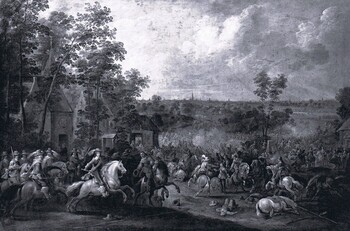
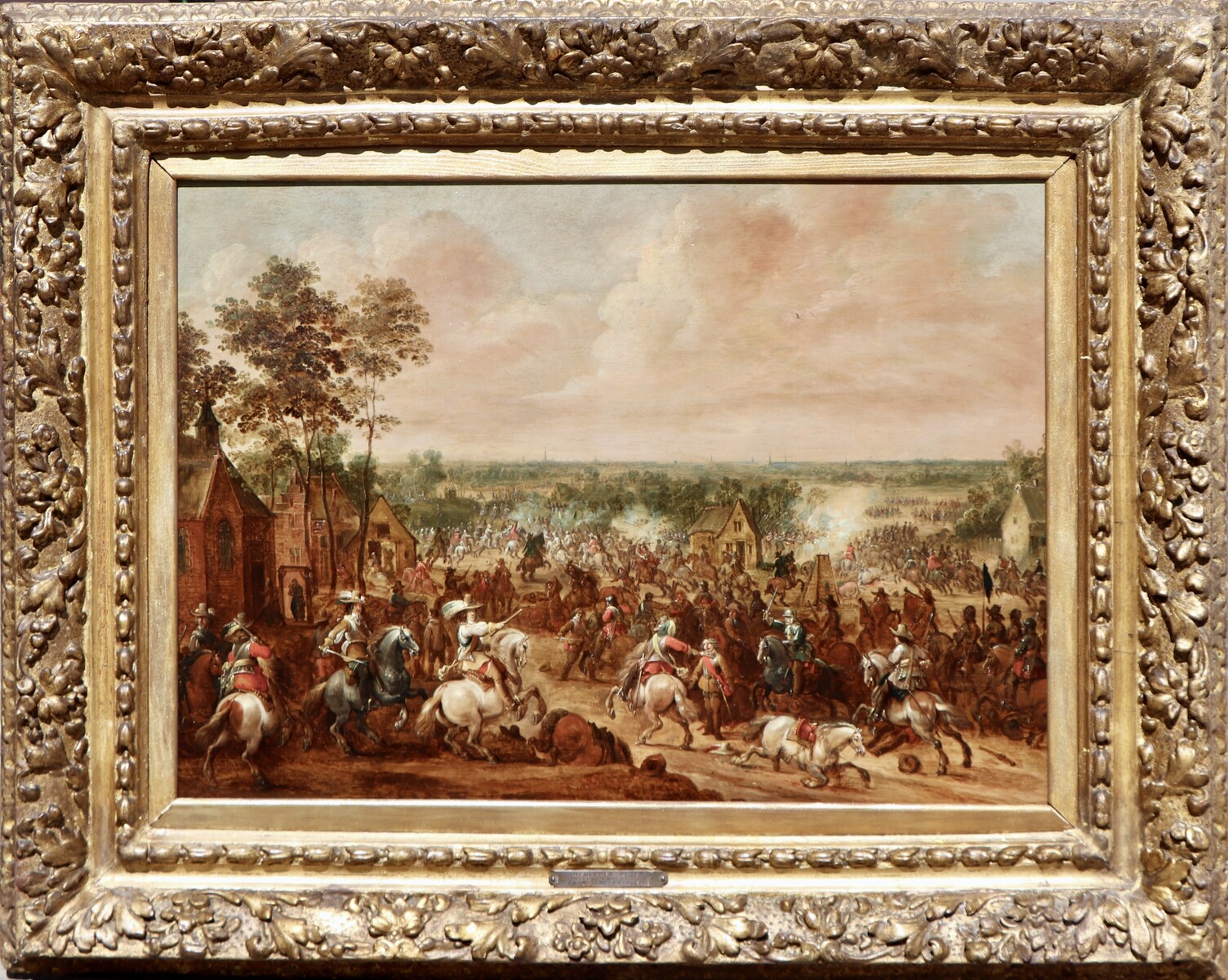
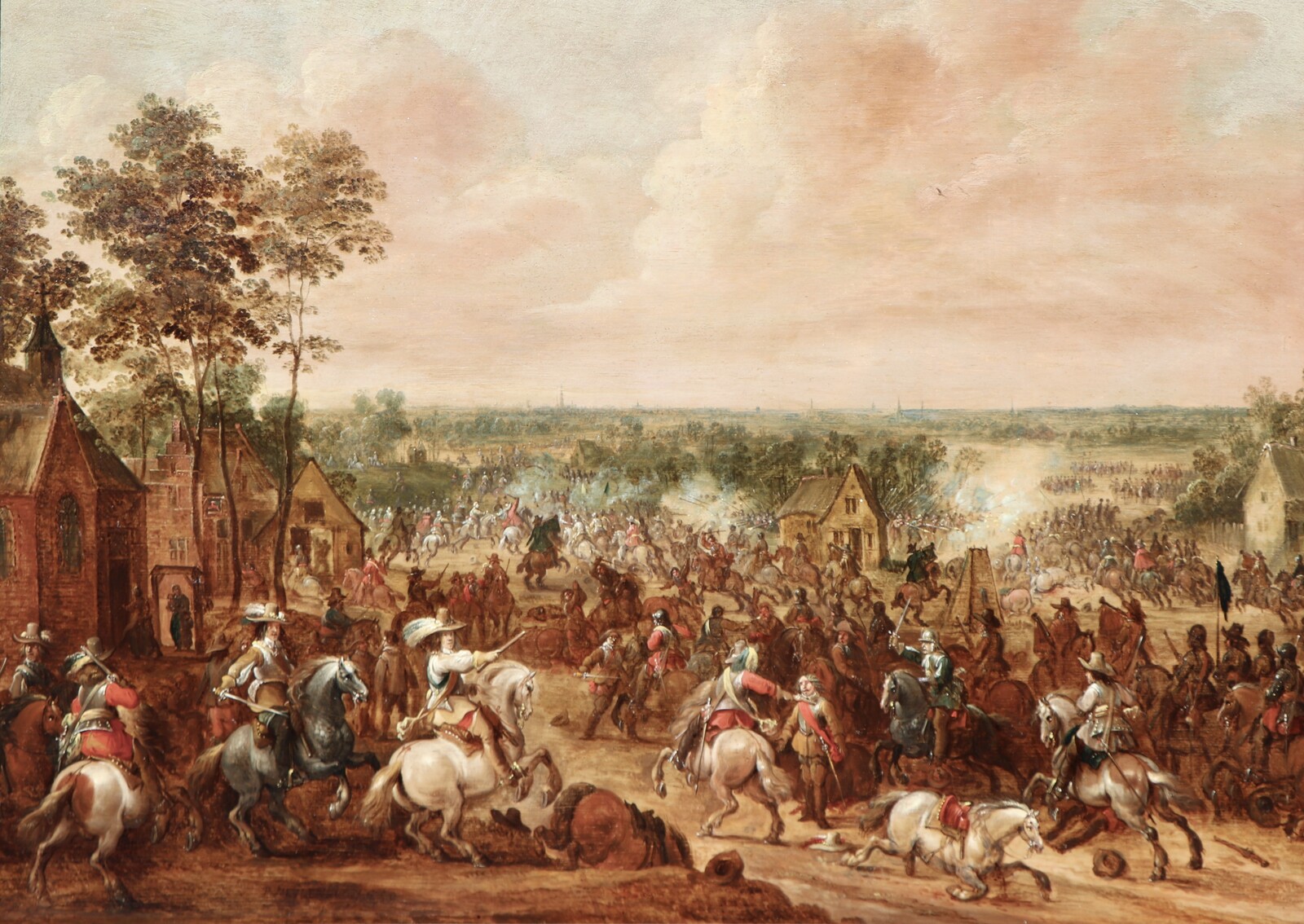
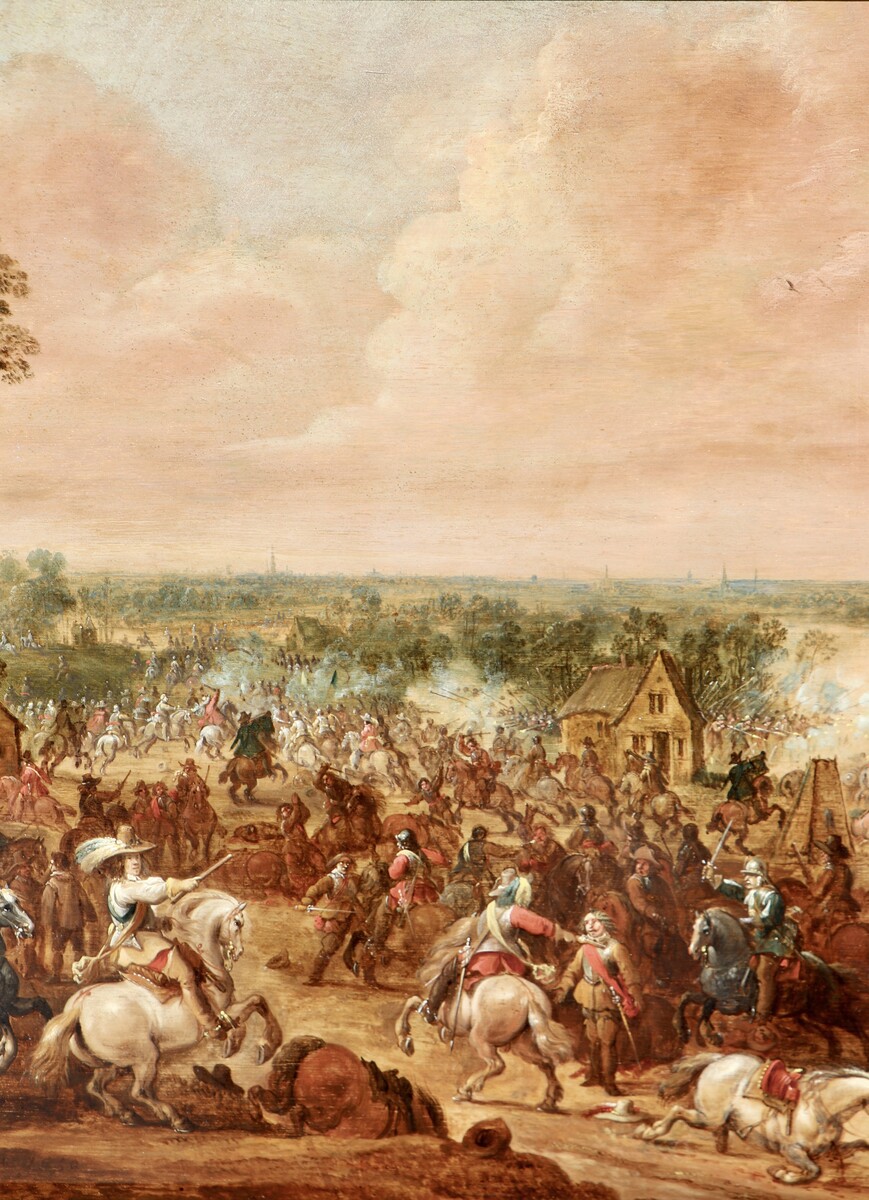
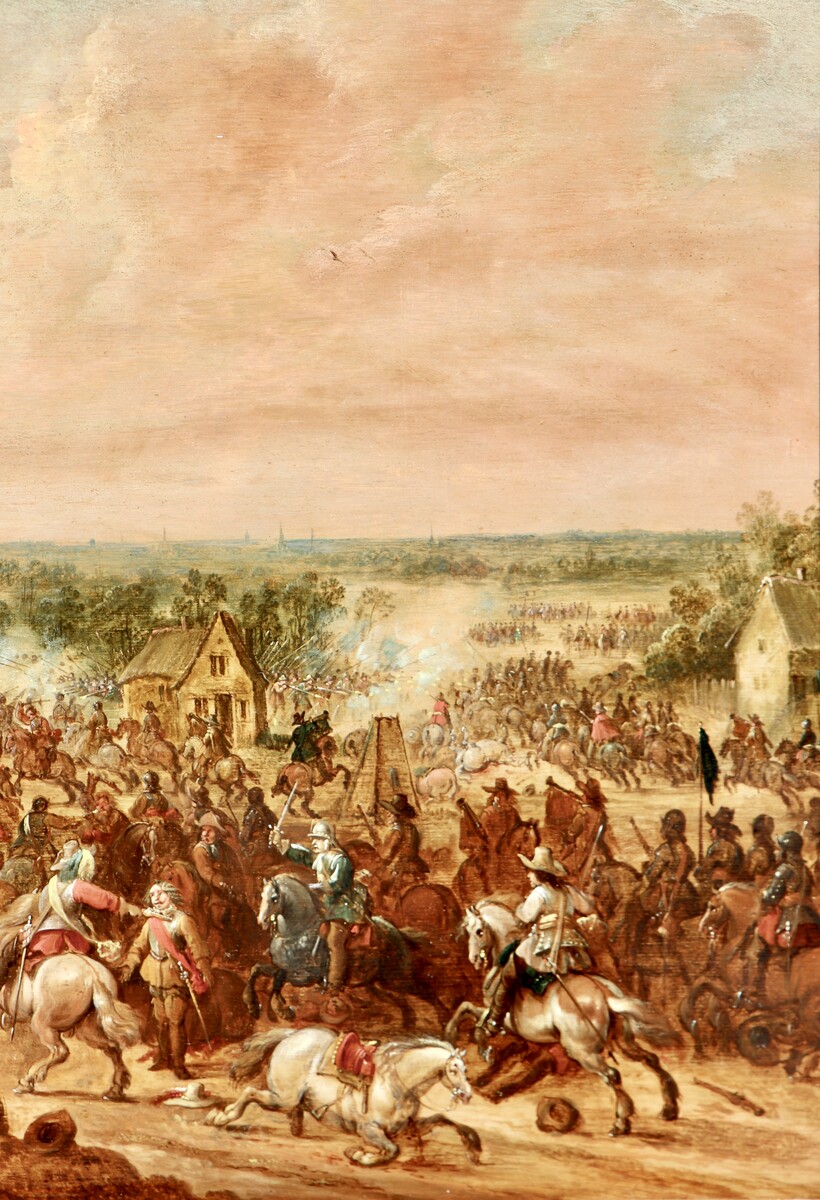
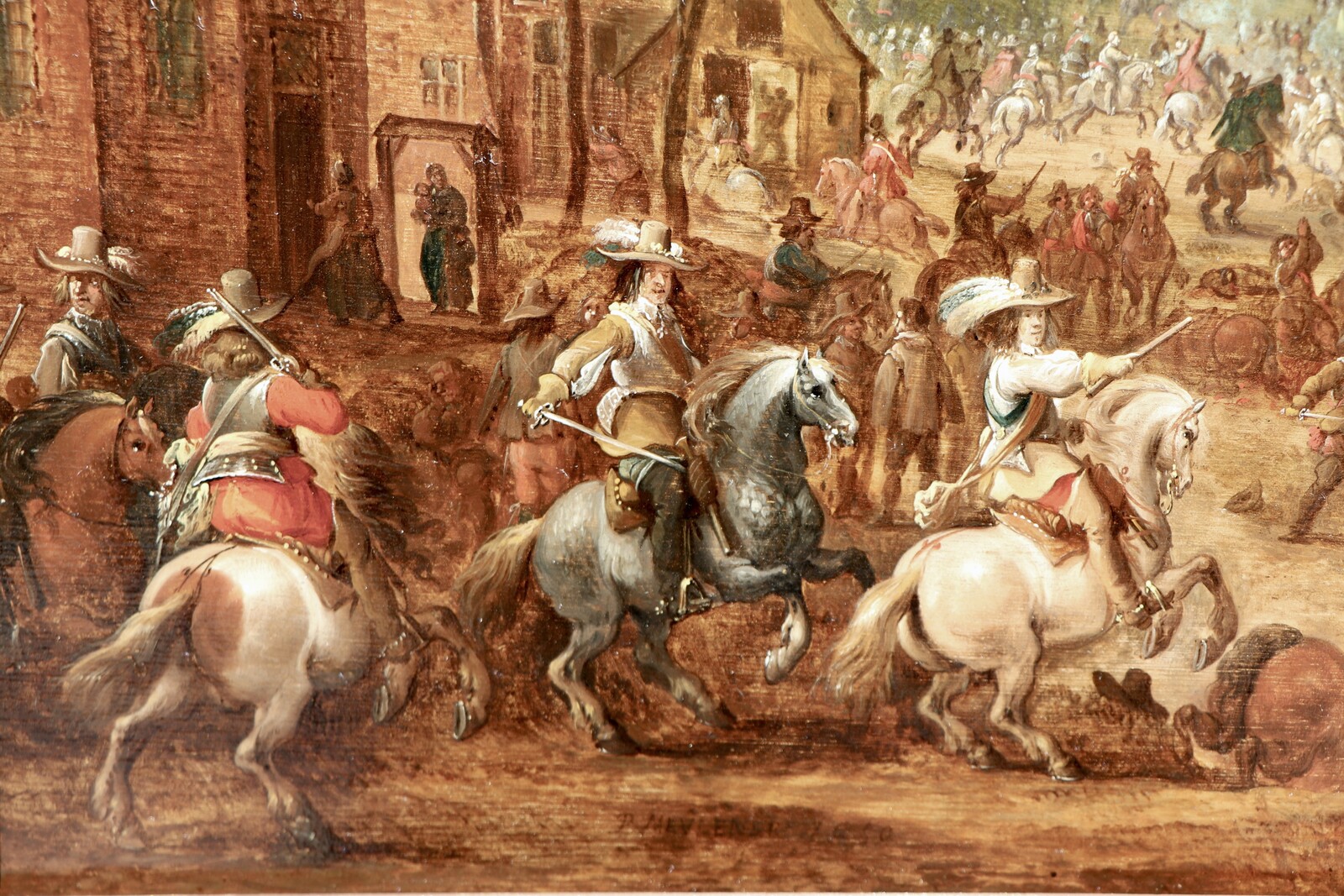
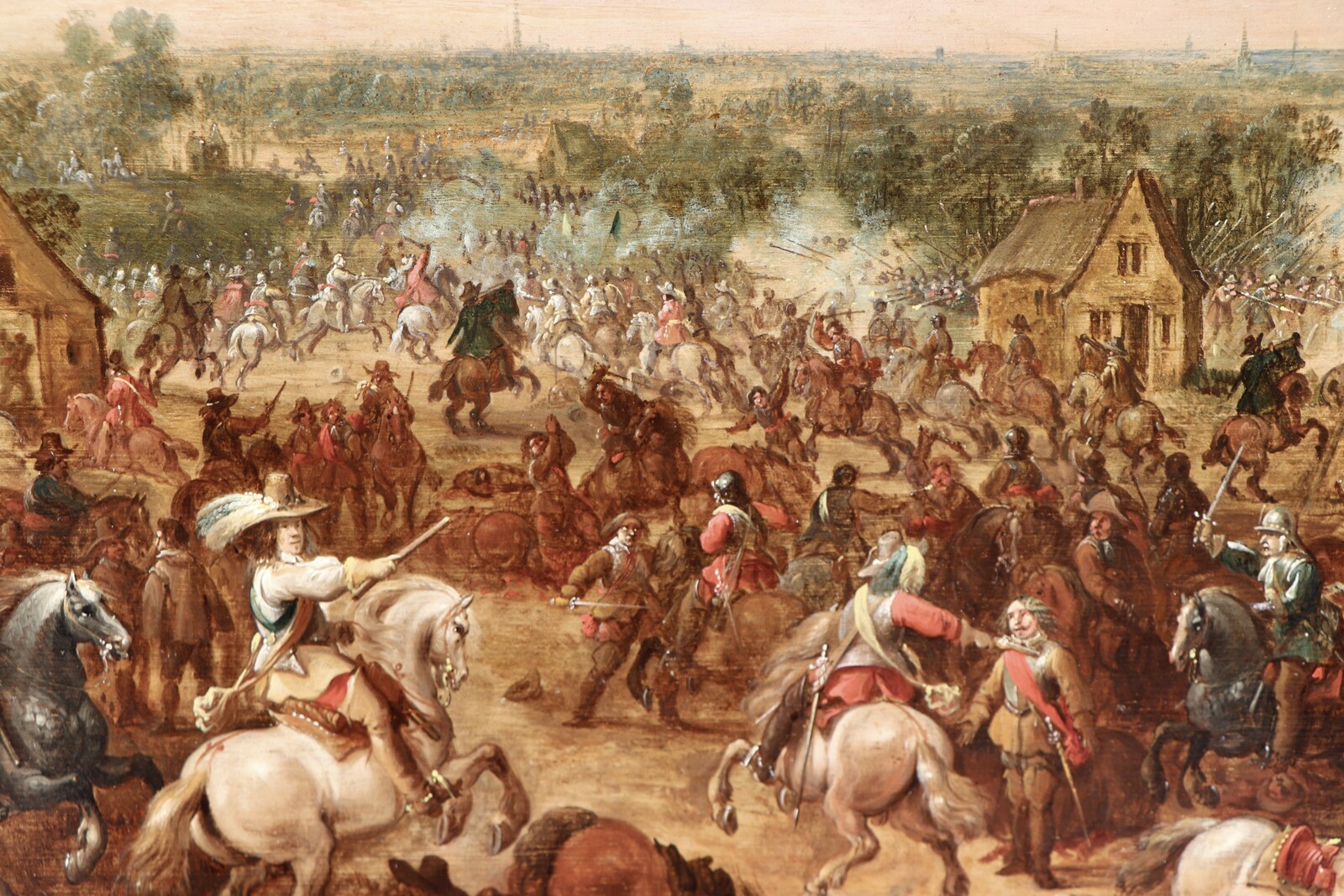
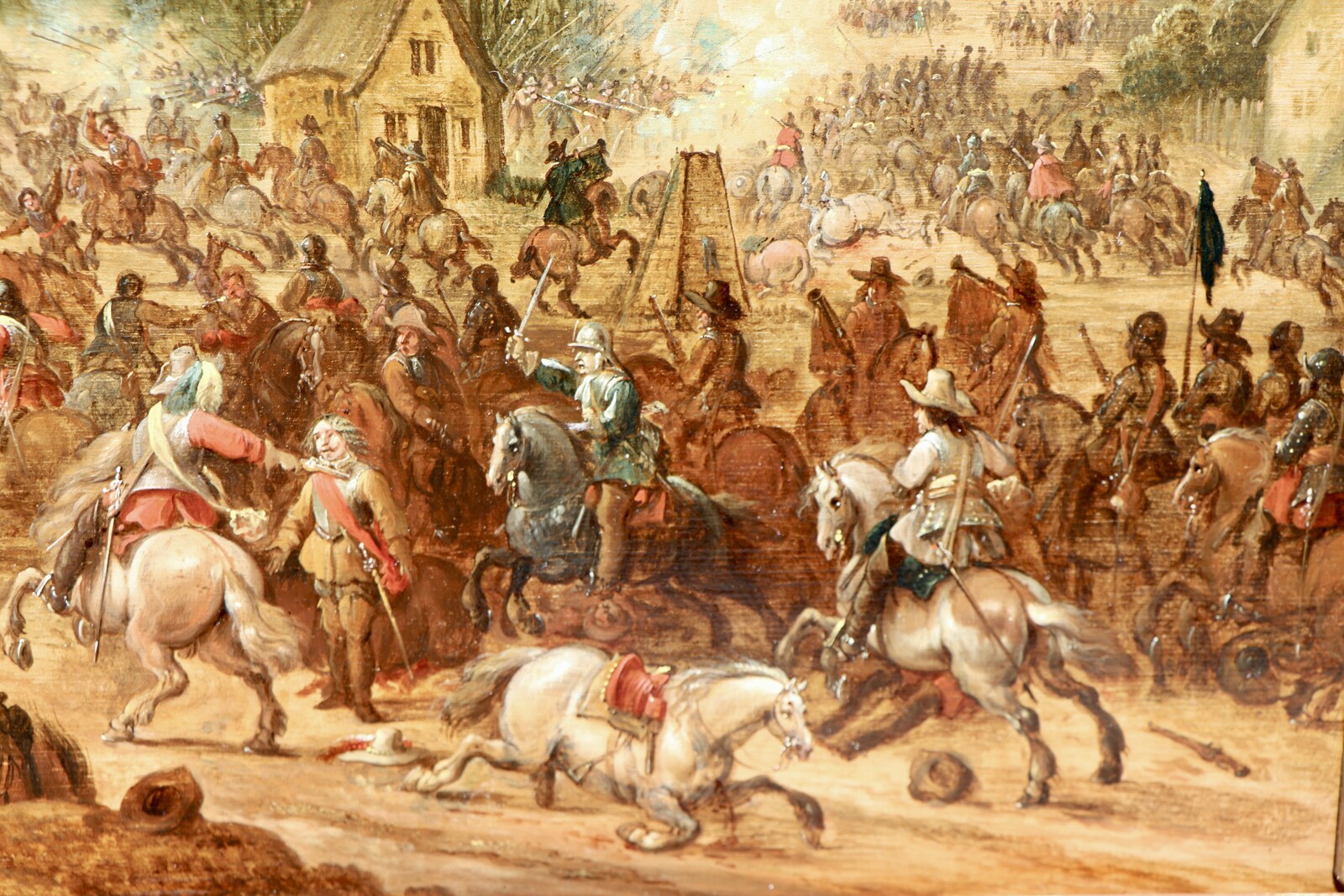
The Battle of Kalloo, 20/21 June 1638
Oil on panel : 46,8 X 65,8 cm
Signed and dated at the bottom towards the left
“P. Meulener: 1650”
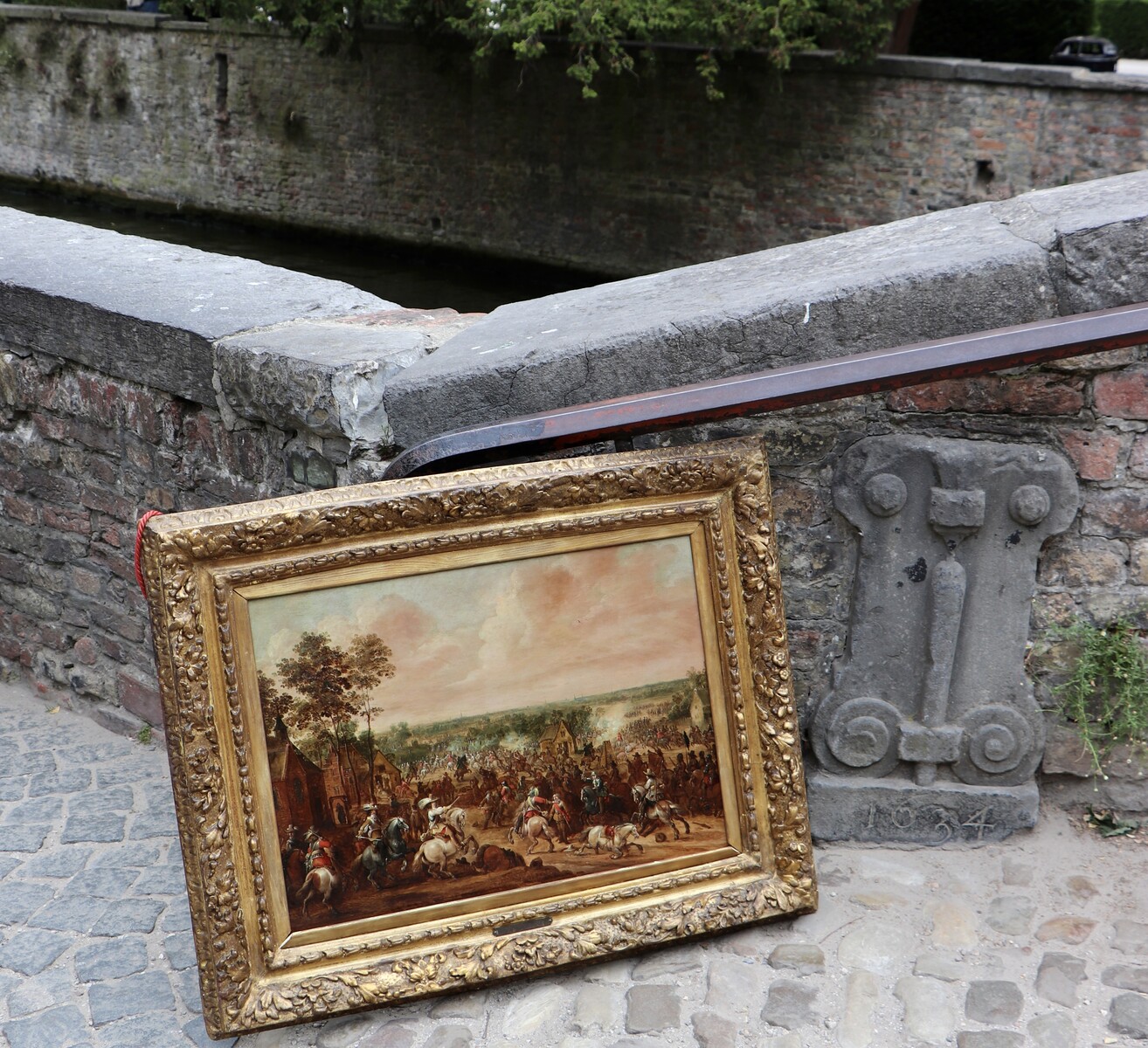
Original wooden sculpted frame : 68,3 X 86,4 cm
Absolute transparency: our cost price = 6.057 €
= acquisition price 5.272 € + shipment 120 € + restoration 785 €
Our export price 8.241 €
In short
Sebastiaen Vrancx, Pieter Snayers and Pieter Meulener were the best- known Flemish battle scene painters during the Eighty Year’s War.
In 1638 the Dutch tried to conquer Antwerp, the most important Flemish town. At the Battle of Kallo they suffered their worst defeat against the Spanish in the last decades of that long-lasting war. Antwerp remained in Habsburg hands.
About Pieter Meulener
Sometimes called “Meuleneer”.
Flemish painter
Antwerp 1602 – 1654 Antwerp
Battle scene painter and occasionally painter of genre scenes in landscapes.
Pupil of his father, Jan Molenaer (who is not to be confused with the homonymous Dutch genre painter) and of Sebastiaen Vrancx (1573 -1647).
Master in the Painters’ Guild of Saint Luke in Antwerp in the year 1631/32.
His early works are influenced by Vrancx, although his colouring stands closer to Pieter Snayers (1592 – after 1666), also a former pupil of Vrancx
and Master since 1612/13.
After 1645 Meulener’s colouring became clearer, as he fell under the influence of Dutch battle scene painters, such as Pieter de Neyn, Jan Jacobsz. van der Stoffe and Abraham van der Hoeff, but especially of Palamedes Palamedesz., in so far that their works can be confused.
About our painting
The Battle of Kallo in June 1638 was a major confrontation in the Eighty Years' War, during which Holland freed itself from Spanish dominion.
In 1638 Flanders was still in Spanish, Habsburg hands. Two Dutch armies tried to encircle and capture Antwerp, the major town of Flanders. The Spanish forces, led by the Cardinal-Infante Ferdinand (the younger brother of King Philip IV of Spain), launched a surprise night attack near Kallo (10 km NW of Antwerp) on troops led by Count Willem of Nassau-Siegen. The Dutch tried to retreat the next day across narrow dikes, but they were driven into the flooded polders and suffered a crushing defeat.
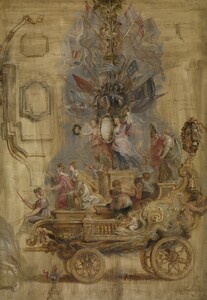
The Battle of Kallo was the worst Dutch defeat of the late Eighty Years' War. The victory was a huge morale boost for Spain. In Antwerp, the triumph was celebrated grandly. The city even asked its most famous painter, Peter Paul Rubens, to design a special triumphal chariot to honor the Cardinal-Infante.
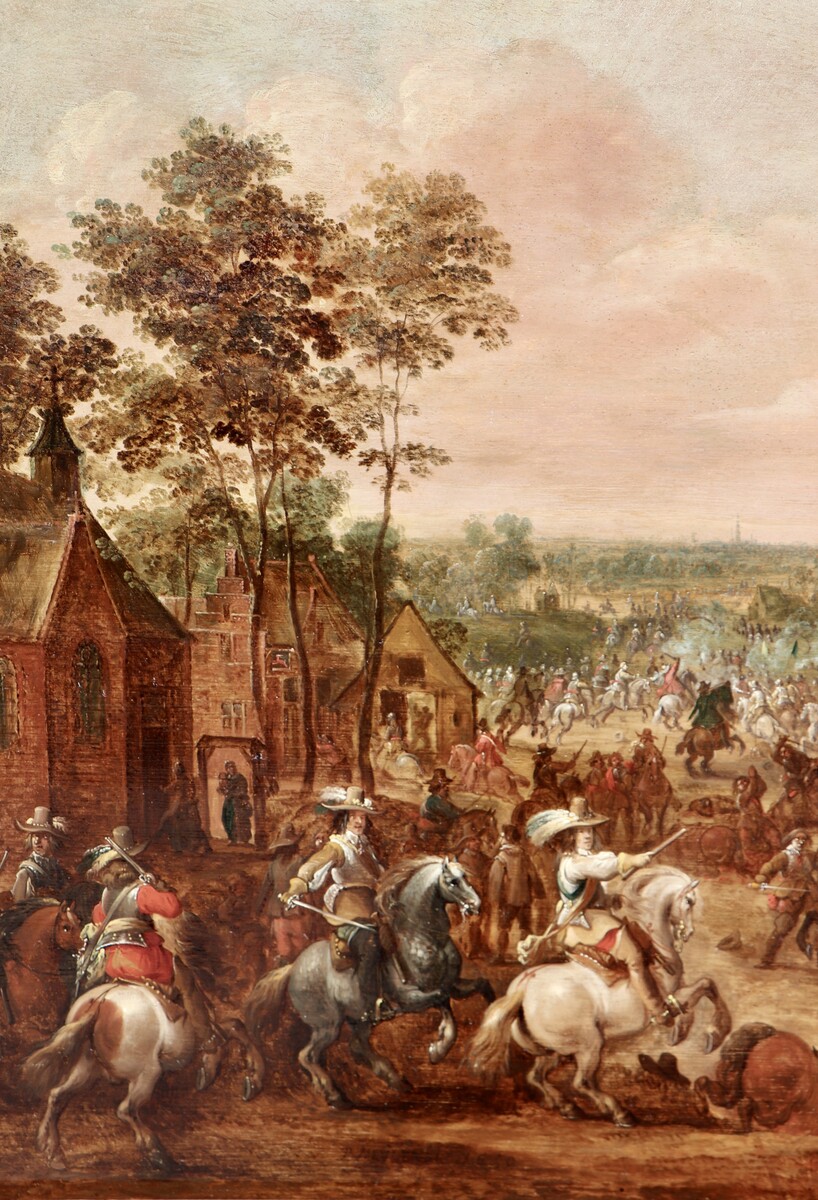
Curiously enough 17th century Flemish and Dutch battle scenes generally show unidentifiable combats. Here one can clearly see the city of Antwerp in the background.
There is another, earlier (1646) and much large version, on canvas, of this battle by our painter. It sits in the collection of the Herzog-Anton Ulrich-Museum in Brunswick, Germany.
Why should you buy this painting?
Because it is an important, fully signed historic document by one of the most famous Flemish battle scene specialists.
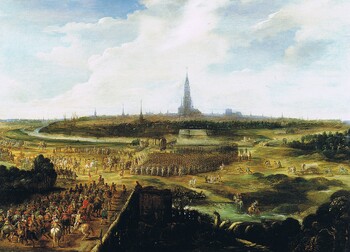
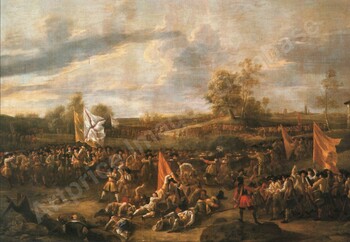
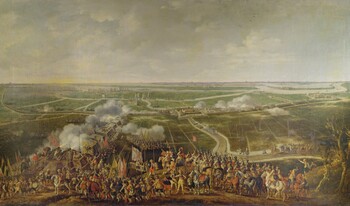
Comparative paintings
Click photos for more details