
9.900 €
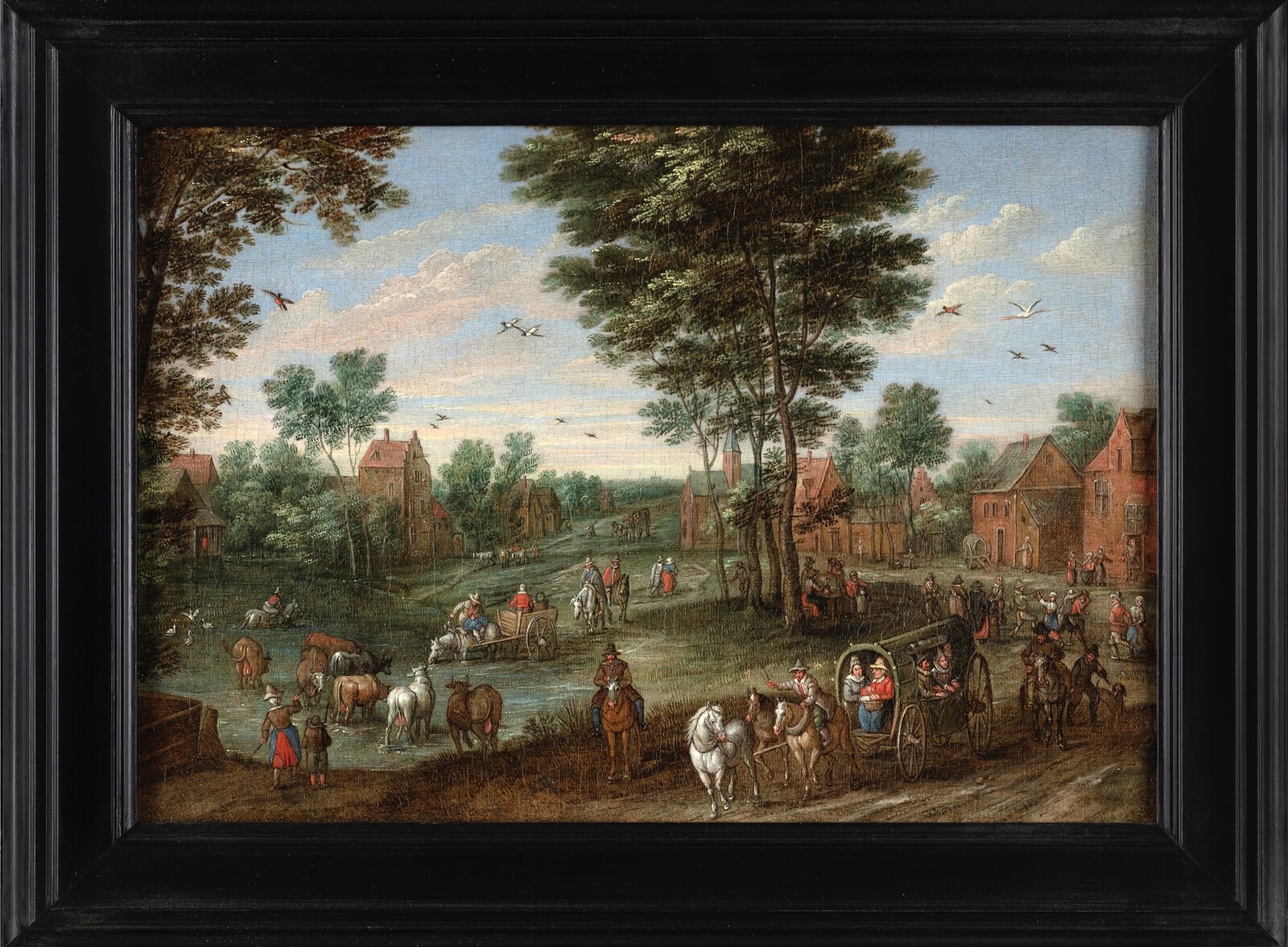
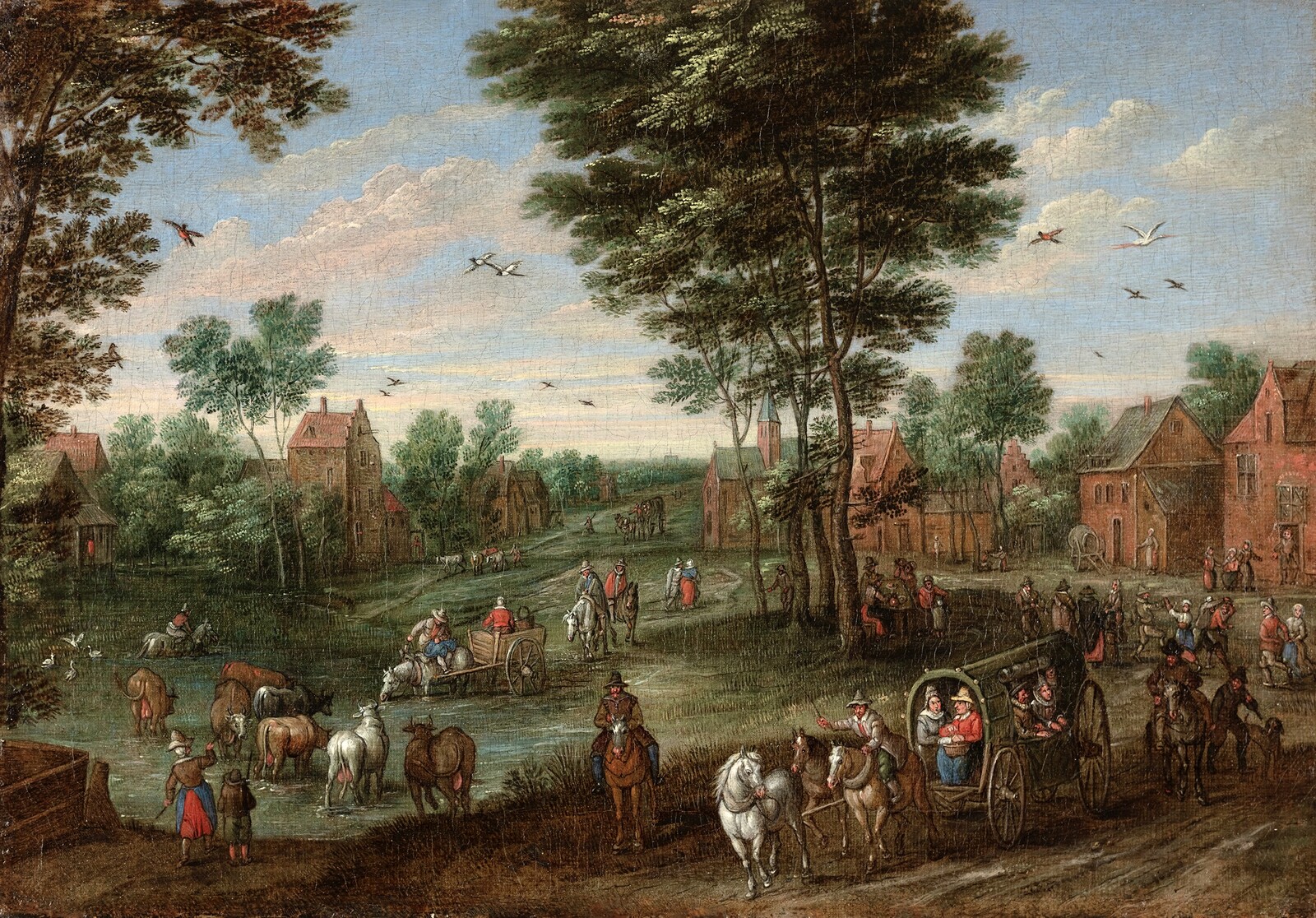
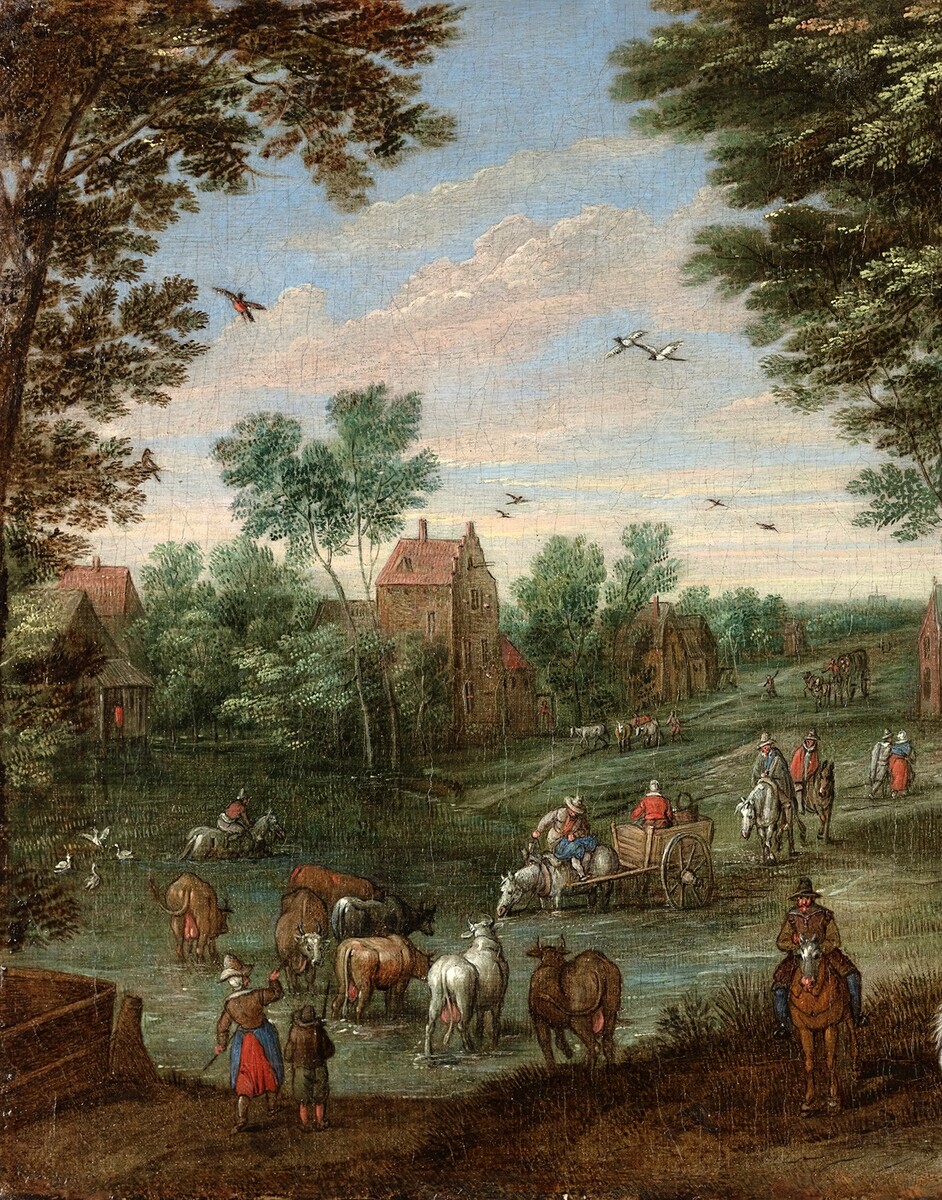
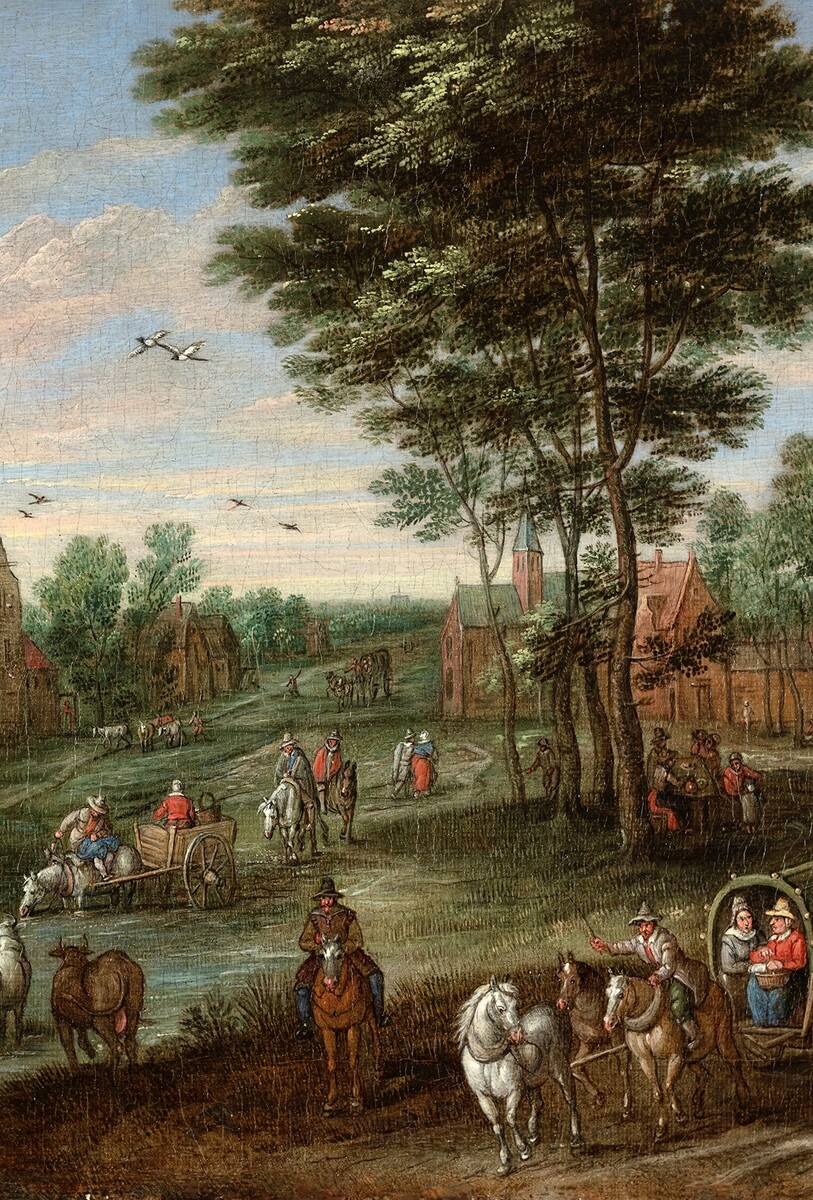
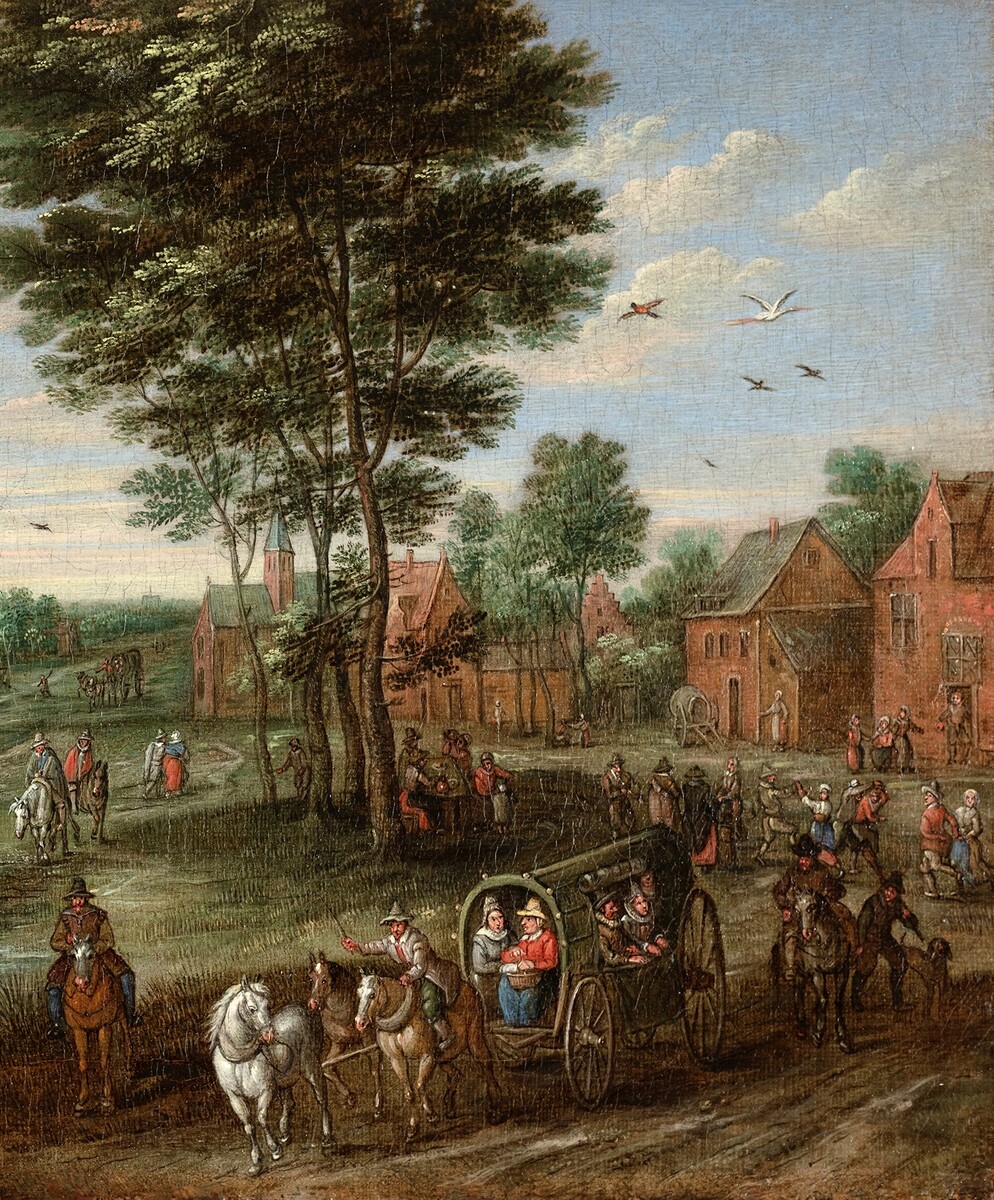
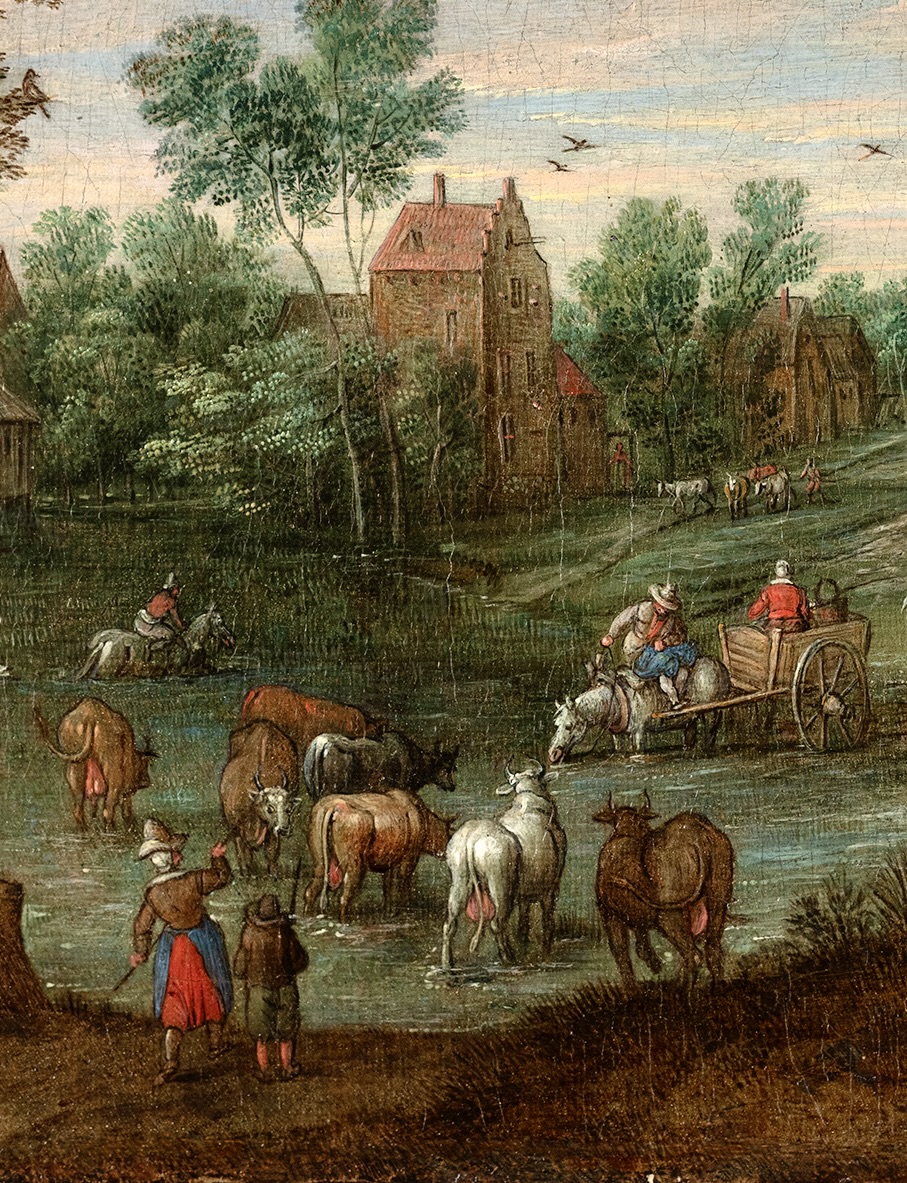
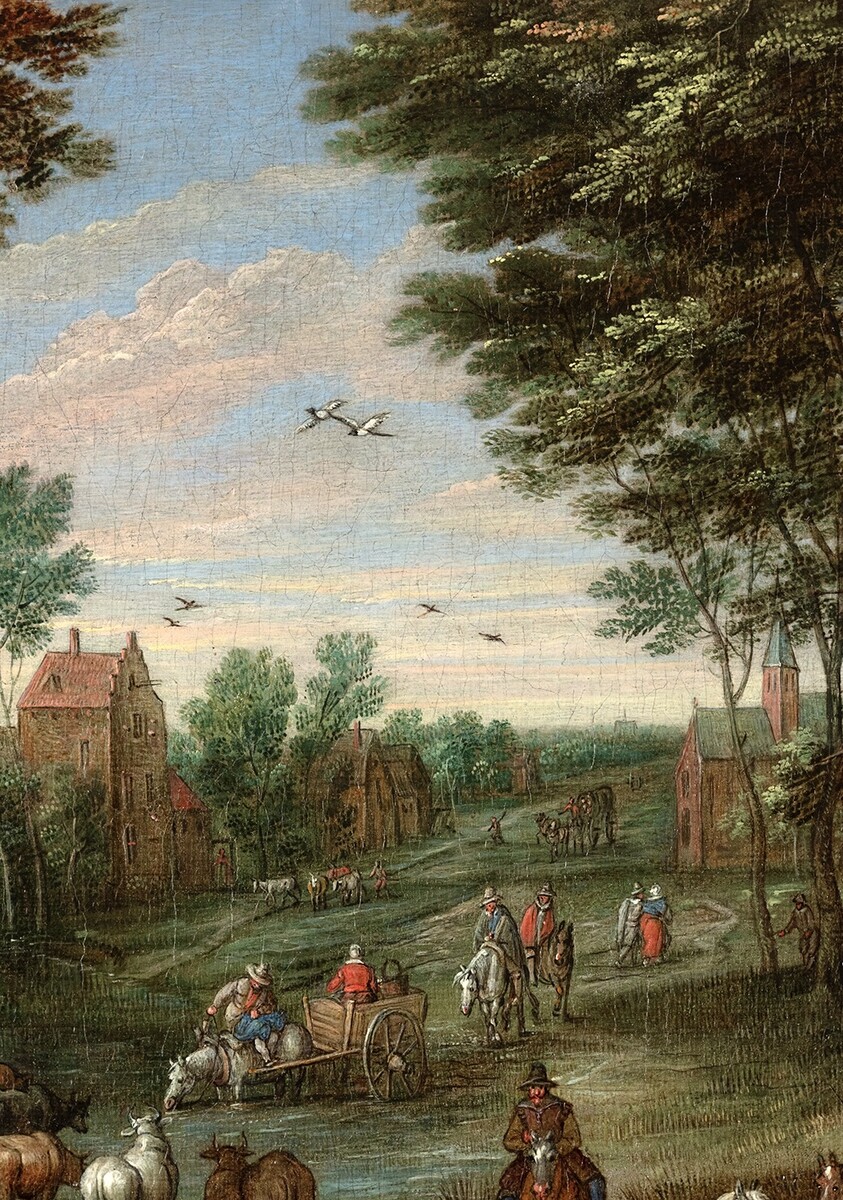
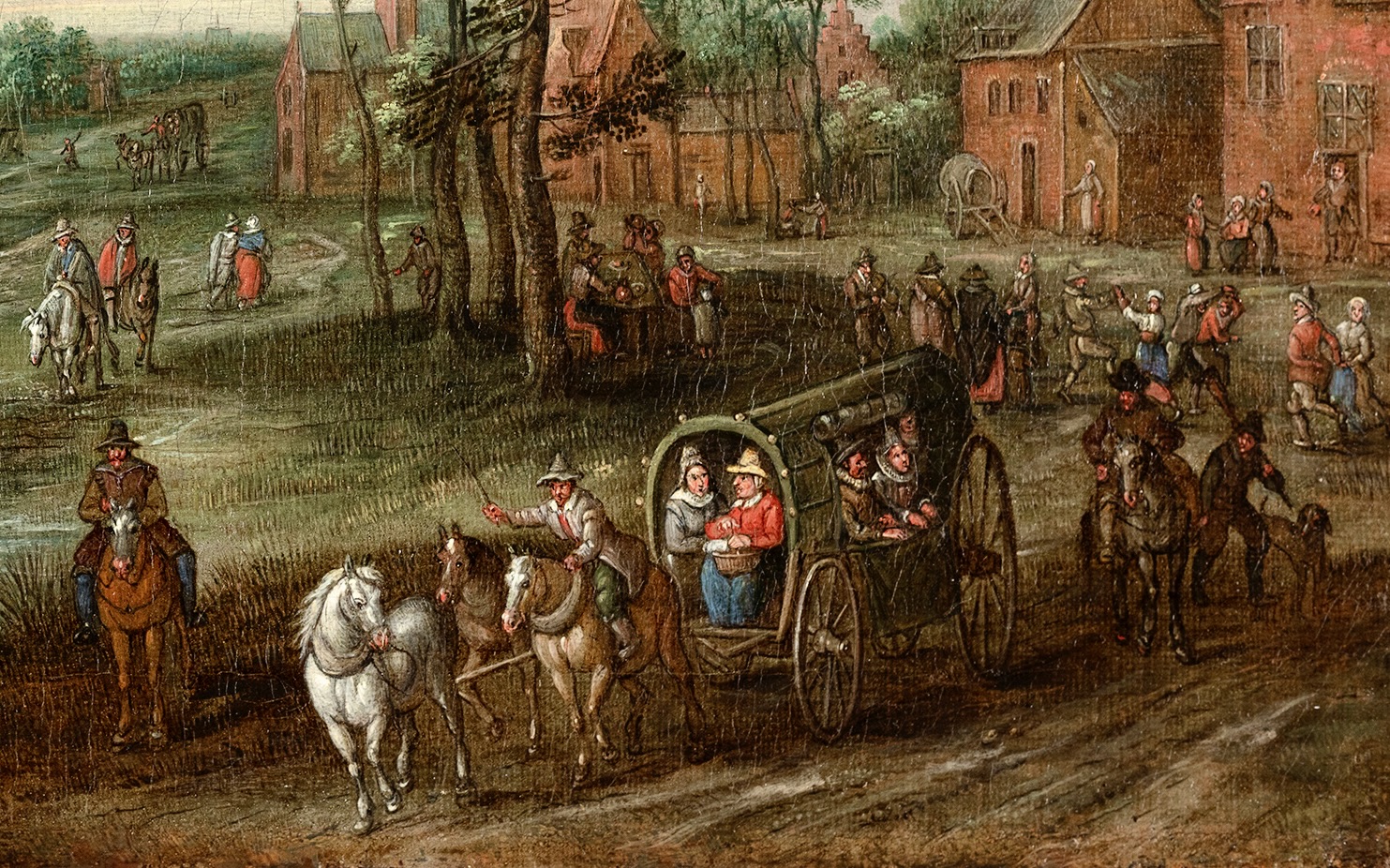
A watering hole in a village
Oil on canvas : 29,5 X 41,8 cm
Unsigned
Frame : 37,2 X 50,4 cm
I would like to thank Prof. Jan De Maere who has given the attribution to the former owner, 23/10/25
Absolute transparency: our acquisition price 7.000 €
Our export price 9.397 €
I am currently documenting this painting
In short
Jan Frans van Bredael I, in fact the complete dynasty of van Bredael painters, specialised in lively, happily animated landscape painting.
This scene is a good example of the revival of the style of Jan Brueghel the Elder (Brussels 1568 – 1625 Antwerp) during the late 17th century and the first half of the 18th century. Antwerp painters, inspired by his example, developed their own distinctive recipe.
About Jan Frans van Bredael I
Flemish painter
Antwerp 1686 – 1750 Antwerp
Landscape painter.
Also known as Jean François van Bredael I.
Third generation member of an important Antwerp family of landscape painters.
- Eldest son and pupil of Alexander van Bredael (1663 – 1720).
- Grandson of Peeter van Bredael (1629 – 1719), a specialist of Italianate market scenes.
- Cousin of Josph van Bredael (1688 – 1739).
- Father of Jan Frans van Bredael II (1729 – 1763/73).
At the age of twenty, Jan Frans the Elder signed a contract with a local art dealer, Jacobus de Wit, to copy for a number of years popular landscape compositions by the Flemish painter Jan Brueghel I and by the Dutch painter Philips Wouwerman. He finally remained active at de Wit’s service for nine years.
He travelled and worked in England in 1716, where he might have stayed for a few years.
He worked in Paris between 1719 and 1723 for local art dealers.
Between 1723 and 1725 van Bredael lived in London. In 1723 he married here Cornelia de Rijck, who passed away in 1730.
In 1725 he moved back to Antwerp, where he remained until his death in 1750. He immediately joined the local Painter’s Guild, of which he became in several years its Dean.
In 1746, during the so-called Austrian Succession War (1740-1748) French troops rapidly conquered very large parts of Flanders on the Austrians. Within a week they also took Antwerp at the end of May. May 31st King Louis XV made his triumphal entry. That day he visited several important local artists, among these our painter. The King bought four paintings from him. Amongst these two landscapes in the style of Jan Brueghel the Elder (as is ours). French noblemen followed the King’s example: our painter sold well to a large number of them.
About our painting
Our painting formed originally a pair with “An animated village view near a river with a ferry passing people”. Sadly, that painting was sold separately, already in 2025.
The buyer of our painting will receive a copy of the certificate for the pair of paintings written by Professor Jan De Maere from 23/10/25.
About the followers of Jan Brueghel I
During the late 17th century and the first half of the 18th century there was a revival of the elder style of landscape painting.
Inspired by Jan Brueghel the Elder (Brussels 1568 – 1625 Antwerp) younger generations of Flemish painters respectfully painted very attractive landscapes with peasant scenes in fresh colours. Typical of all of them is a bucolic sense of happiness, of “joie de vivre”, with small figures in anecdotally detailed poses set against a backdrop of a pleasing landscape or of some buildings.
Best known are:
Jan’s son Jan Brueghel II (Antwerp 1601 – 1678 Antwerp)
Isaac van Oosten (Antwerp 1613 – 1661 Antwerp)
Pieter Gysels (Antwerp 1621 – 1690 Antwerp),
Adriaen Frans Boudewijns (Brussels 1644 – 1711 Brussels)
Peter Bout (Brussels 1658 or earlier – 1719 Brussels)
Matthijs Schoevaerdts (Brussels? Circa 1660/65 – 1702/12 Brussels?)
Elisabeth Seldron (Born circa 1675 – 1761 Brussels)
Theobald Michau (Tournai 1676 – 1765 Antwerp)
Joseph van Bredael (Antwerp 1688 – 1739 Paris)
Carel Beschey (Antwerp 1706 – 1776? Antwerp?)
Balthasar Beschey (Antwerp 1708 – 1776 Antwerp).
Why should you buy this painting?
Because it is good example of a happy 18th century Flemish village scene, inspired by earlier models.